What "instant" really means on results morning
Instant result card PDF delivery on WhatsApp means this: the moment results are published, each parent receives their own child's result card as a PDF in their own WhatsApp chat. No trip to school, no queue at a notice board, no paper slip carried home.
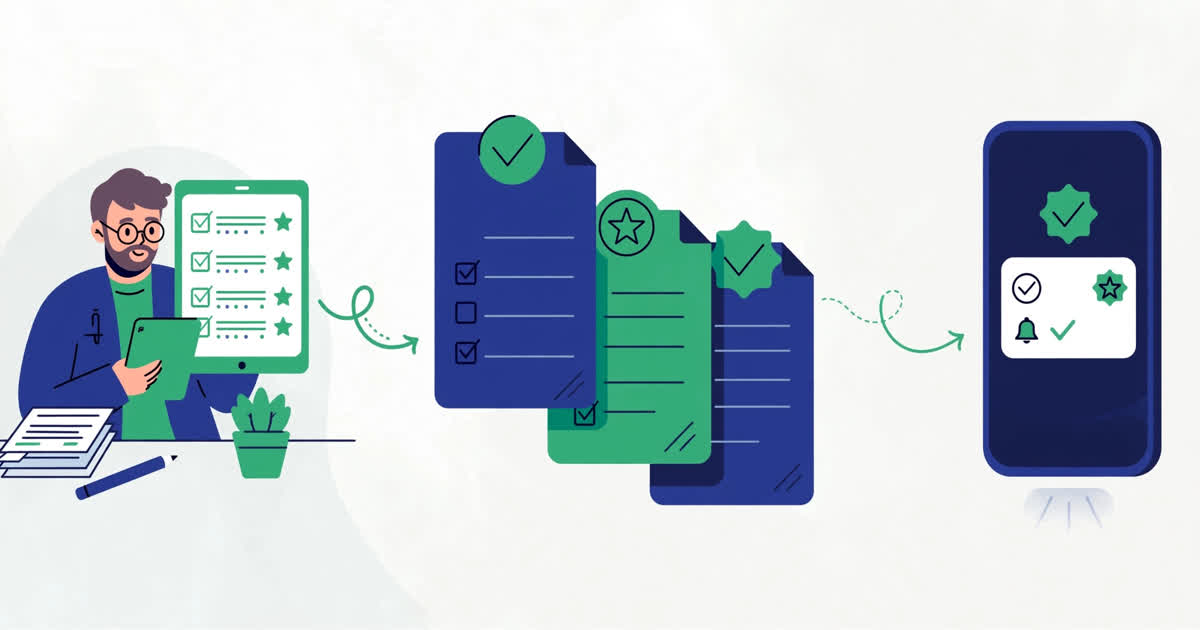
Most vendor pages describe this feature in a single line. That line hides the real work. Instant delivery is a chain: marks finalised, cards generated, each card matched to the right parent's number, files sent, and delivery confirmed. If any link is manual, "instant" becomes "sometime this week".
Speed matters beyond convenience. On results morning, parents who have not heard anything call the school. A card that arrives before the questions start keeps results morning calm.
Push vs pull: send the card, or wait to be asked
Two ways exist, and the difference decides whether results morning is calm or chaotic.
The school sends the card to each parent
When results are published, the system sends each parent their own child's PDF directly, in a private chat. Every parent gets the card at the same time, so no parent learns the result second-hand from a group chat first.
The parent requests the card, for example by typing a roll number
Some school bots work the other way round: a parent types the child's roll number into a bot, and the bot replies with the PDF. This is a useful backup for a parent who missed the message or changed their number. But as the main method it has three weaknesses. First, it depends on parents knowing the system and the roll number. Second, it spreads delivery across the whole day, so the office still fields "where is my card" questions. Third, it is only as safe as its checks: a card must never go to anyone who types a number, so the lookup needs a second check, such as matching the requester's number to the registered number.
The practical answer is both, in that order: push at publication, and keep a verified lookup open for the exceptions.
The results-morning timeline, step by step
Here is the timeline. Each step has one owner and one check.
- Before results day: freeze and verify. Marks are entered, totals calculated, and a sample of cards checked against the register. Parent numbers are checked too: changed numbers must be updated before publication, not after.
- Publication moment: generate all cards at once. Cards are generated from the final marks in one run, not typed one by one. Each PDF carries the school name, student name, class, exam name, subject marks with totals, and the result date.
- Matching: each card to its own parent. This step decides privacy. Each card is paired with the registered parent number for that student, and nothing else. A card must never go to a class group or an unregistered number.
- Send: one private message per parent. Each parent receives one message in their own chat: a short line naming the student and the exam, with the PDF attached.
- Confirm: delivery log, then follow-up. The school logs which numbers received the card. Parents with no delivery get a call, an SMS, or a re-send. Results morning ends when the log shows every parent reached.
PDF vs link vs photo: which format actually works
| Format | What the parent gets | Main problem |
|---|---|---|
| PDF document in chat | A readable card that opens on any phone, prints cleanly, and stays in the chat | Needs the file generated correctly first |
| Link to a portal | A page that may need a forgotten login | Parents who cannot log in call the office instead |
| Photo of the register or a paper slip | Handwriting, glare, and other children's rows | Hard to read, and a privacy risk |
| Plain text message with marks | Numbers with no layout or totals | Parents must do the maths, and errors creep in |
The PDF wins for three reasons. First, it needs no login, no app, and no password reset. Second, it prints exactly as it looks on screen. Third, it stays in the chat history, so when a parent needs the card again weeks later, it is still there. A link can expire, and a photo can be deleted by accident.
The format does not protect privacy, the matching does. A PDF sent to the wrong number is a privacy failure. Send a test card to a staff member's number first.
Five delivery failures, and how to prevent each
- Cards sent to old numbers. Collect updated numbers before results day, and treat any delivery failure as a prompt to call.
- The wrong child's card to the wrong parent. This happens when cards are matched by class list order, not by registered parent. Match by the student record, and never send to a group.
- Files too large for a basic phone. A card crammed with images will not download on a slow connection. Keep the PDF to text and tables.
- Parents learning results from a group first. If a topper list goes out before the private cards, the delivery has already failed. Send private cards first.
- No follow-up for undelivered cards. A send with no delivery log leaves the school blind. Log every send, and close failures with calls or re-sends the same day.
The send checklist, before you press send
- Marks are final, sample totals match the register.
- Parent numbers are the current registered numbers.
- Each card is matched to its own parent, by student record.
- One sample card opened on a real phone reads well.
- One message, one child, one PDF.
- Private cards go out before any group announcement.
- A delivery log is ready, with someone owning failed-delivery follow-up.
Frequently asked questions
What does instant result card PDF delivery mean?
Each parent receives their own child's result card as a PDF in their WhatsApp chat, as soon as results are published.
Should parents request the card, or should the school send it?
Sending it directly (push) is better: every parent gets their card at the same time. Request-based lookup (pull) is a backup for parents who missed the message or changed numbers.
Is a PDF better than a link or a photo?
A PDF is usually best: it opens on any phone, prints cleanly, and stays in the chat. A link needs a forgotten login, and a photo of a register is hard to read and risks exposing other children's marks.
What should a school check before a bulk send?
Check three things: every card matched to the right parent's number, sample totals that add up, and one sample card opened on a phone to confirm it reads well. Then send, and keep a delivery log for follow-up.